

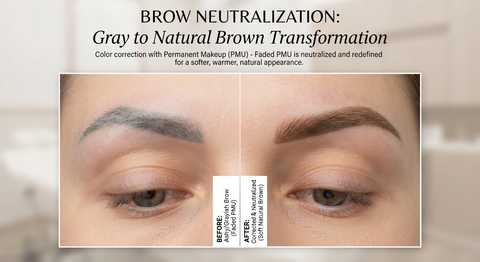
Assessment and color mapping
Every Brow Neutralization starts with a focused assessment of the existing pigment: its hue, depth, and how it has faded in the skin. We review your prior procedures, photos, and skin undertone to determine the neutralizing direction. This assessment guides whether balancing pigments are appropriate and sets realistic expectations for color change and longevity.
Clients from Loveland and nearby suburbs often schedule neutralization alongside errands on the Loveland‑Madeira Road corridor or after commutes on I‑275. Because pigment age and previous techniques vary, some cases require follow-up adjustments. We discuss timing, expectations, and whether a staged approach better balances color without overworking the brow area.
Basic color neutralization principles
Color neutralization uses contrast and color relationships to reduce the visual impact of unwanted tones left in the brow. The artist chooses pigments that counteract remaining hues while considering your skin’s natural undertone and how pigment sinks into different layers. This is a balancing act — the aim is to shift tone, not to erase pigment entirely.
Trade‑offs are part of correction: heavily recessed or dark pigments may only be softened, and uneven previous work can limit predictability. We’ll review how local climate, sun exposure, and your activity level — such as time on the Little Miami Scenic Trail — influence healing and settling, so you can schedule the procedure for the best possible outcome.
What to expect during appointment
Appointments for Brow Neutralization are scheduled for 80 minutes and are priced at $100. During that time we confirm the assessment, select the neutralizing plan, and perform the corrective application selected for your skin. Expect a focused visit that documents existing color and lays out any recommended follow‑up or touch‑up timing.
Aftercare supports pigment settling and varies with skin type and lifestyle. Because Loveland residents enjoy outdoor recreation and trail time, plan your appointment around days with lower sun exposure and less strenuous activity. We provide written aftercare guidelines so you can protect the brow area during the initial healing phase and monitor fading.


